

You might be thinking, “If I’m writing fiction, why do I need to do research? This is a fictional story. Why can’t it be anything from my head?” It can be, if you know what you’re writing about but even then I would say you’d benefit from doing a little research. Imagine you’re writing taking place in your hometown. You know it like the back of your hand…or, do you?
Wouldn’t you want to research how many movie theaters there are in the area? What about the names of streets you’ve never been to, but your character has? In order to know, you gotta do some searchin’.
Or, what if you’re writing a fantasy? Surely, fantasy can all come from your trusty brain, right? Wrong. I guarantee you will come across moments where you need just a tad bit more information about what kind of plants grow in a marsh, what the name of that certain historical piece of clothing is, or how long it would take someone to travel on horseback if they started in the morning.
If you’re a walking encyclopedia with instant-memory-recall abilities… Nope, even then, you’ll have to check if you got it right. I always do a tone of research for my stories and end up with a bank of the most random information.
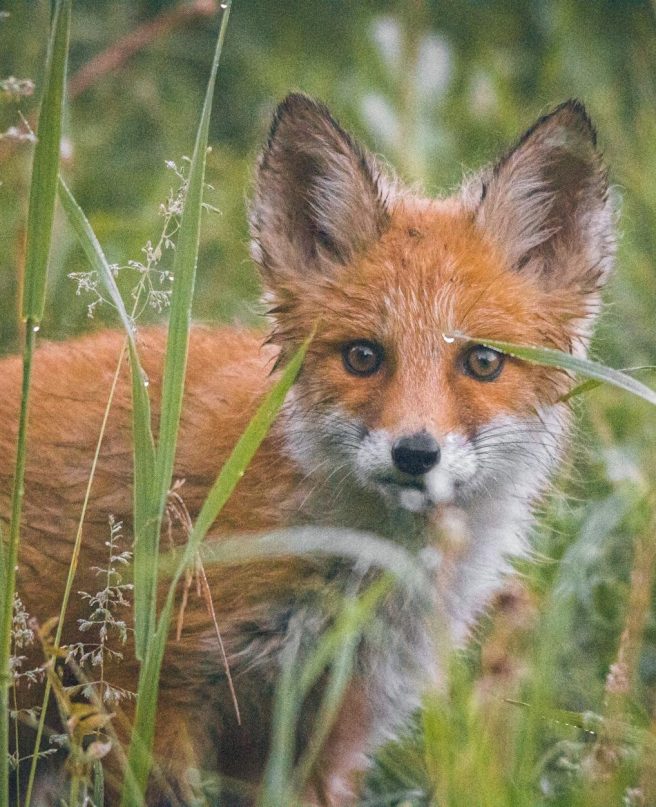
Did you know that foxes are nearsighted but have an excellent sense of hearing?
But why do you need to do research? To make the story seem more real, more immersive, believable, and to flesh out the world.
Now that we have established that you would benefit from researching as a writer to make the story believable and immersive, how, is the question. Where do you start? Where do you go? WHAT??
I gotchu.
Where to start for story research?
Wherever you want.
I’m sorry, this isn’t very helpful, is it? But it depends on the genre and the plot.
If you decide your story is going to be a fantasy adventure set in a magical world with royalty, you might want to know what types of royalty titles there are. If you want to go full-on Medieval Europe, you might like to know if the Earl is more important than the Constable (go look it up, for I cannot remember, unfortunately). But if you want your book to be set in Ancient China, well that’s a whole other story. Some writers who want to know about the landscape first, might decide to do some research on types of terrain, types of climate, types of animals living in what types of environment.
Other writers might want to find names for their characters, so they might do some research on character names and some might want names that reflect the era.
I would suggest to figure out some core elements of your story first. Something that is important to the plot. You can’t do without it, but you also need to know some more facts.
So, for me, I might look up the technology of the era of inspiration because I want to know what type of long-distance communication my characters would be doing. It’s important to the plot. Another thing for me is forests. I often have a forest in my stories as a core element, and so, I might decide my forest has pine trees, but what else would be growing with pine trees and what kinds of animals would live in a pine tree forest?
You could do it like me, and find some core elements of your story and begin there, if you’re feeling lost.
Where do I go for my research?
So, I’m going to talk about my case, but I have seen many writers say they use these as well.
- Google Search: Includes all those below, but this is more about finding blog posts (travel blogs are great to describe places you’ve never been before or you have been to but don’t remember everything), or some credible information website like Psychology Today. Also, niche blogs exist. I once found a blog that only talks about different types of metal gates. Thank you, now I know exactly what one can do with a wrought iron gate in terms of design.
- Google Images: Just to see what a thing looks like to be able to describe the thing. I’m a visual person. It helps me to see the thing in order to describe it. These days (after 2024), AI is much too abundant and annoying with its fakeness, so I like to stick on keywords like “photography” or “illustration” or actually name a country because I want to see the REAL thing. “photography” is a pretty good one to add.
- YouTube: Often you can find very niche videos on things like, how far can one throw a spear, survival tips how to make natural soap, or how middle class people lived in the 1800s. Think that there’s a video on everything and if you’re clever with your keywords, you can find some nice videos and figure out how to explain or describe something you’re unfamiliar with.
- Wikipedia: For anything, really. I learned about the different types of materials used for roads thanks to Wiki, and have settled on sett for one of my stories. I settled.
When to stop?
I have seen people asking this question in online writing groups. I have talked with people who have been doing worldbuilding on their fantasy novel for over ten years. Some people have said they can’t stop. They just go on and on.
I honestly don’t know what to tell you if you’re struggling with this. I don’t have this problem, so I don’t even know what to say about “when”. There is no universal rule or anything. What I can do, however, is say this: I stop once I feel like the world is fleshed out enough in order to tell the story in a way that is believable and immersive.
Bottom line, you want to engage the reader, right? I hope so.

 FOXWOOD FOREST