

Writers, let’s talk honestly here. Finding a willing soul who would critique your story is hard. Even if you join some community writing website where millions of people log on to write or read every day, it’s gonna feel like squeezing a near-empty bottle of toothpaste trying to find that perfect someone who is willing to help you with your story.
I’m on Wattpad (and before that, I’ve been on Figment) and I’ve offered to give critiques. There’s at least 30 people in my Wattpad Critique list I made who are craving critiques and help because they want to grow and be awesome. But the thing is, I’m suffering over here with my own stories. If I do have time to do any reading, I would prefer making my way through my extensive physical to-be-read (TBR) pile instead. I have shelves of a TBR. It’s pretty bad, ha.
When I have taken the time to give critique and the first thing I hear is a long defensive explanation of why something isn’t the way I read it, I get annoyed. If you have to explain to me what’s going on in this scene, that means whatever is written here isn’t doing its job, so you need to fix it. I know it’s hard to recognized that the story wasn’t perfect because I’ve been on the receiving end multiple times online and in person.
The first time I got critiqued by someone properly in person was in a Creative Writing class at my university. It was…brutal. And I felt ripped apart and defensive. I didn’t defend myself though. I already knew not to from online experience.
Anyway, I made my case. I’ve critiqued people and been critiqued. I know both worlds and both require some form of “critique art”.
In this article, I’ll be diving into some things which I have found out are good to keep in mind when receiving critique. How do you receive critique? What if you hear something you don’t like or severely disagree with? What if it hurts? Also, the article will also have some extra bits when it comes to receiving critiques, and it will end with how to go about dissecting critiques based on my own experiences.
How to Receive Critiques?

1. Swallow your pride. Make yourself super humble. You did not write it perfect yet.
Not even Fredrik Backman, Kristin Hannah, or Stephen King started out writing masterpieces. Nobody is perfect and nobody starts out perfect. You and I are not an exception either. You know the phrase, “get another/second pair of eyes on it”? It’s a good one, right? Even just one other person looking at your stuff can make you realize “Oh, yeah, you’re right. This isn’t working” or “Oh, yeah, I didn’t notice that mistake.”
Kristin Hannah isn’t writing a draft and then immediately getting published. She’s writing a draft and then a bunch of editors are looking at it. It’s a multi-person endeavor. Kristin Hannah knows that her first draft is not perfect yet. She’s humble about it. That doesn’t mean she isn’t a great writer. But she knows that she needs a second pair of eyes on her manuscript to elevate it to heights that she couldn’t have reached alone.

2. Absorb critiques like a sponge.
The good, the bad, and the ugly (this sounds familiar, but I don’t know why). You need to soak everything up. I know it’s hard. I’ve been writing for years and it’s still hard to soak up critique that I would rather forget ever happened. No one wants to see something they don’t like or agree with.
Pause. Breathe. Be a humble pup.
Now be a sponge. Just read it all. Take it all in. Absorb it. You might be afraid to see what this “so-called critic” is going to say about your “so-called masterpiece”. You will feel happy, hurt, ripped apart, ecstatic, and have the worst and best emotional rollercoaster of your life. It’s going to be such a time. Remember, you’re a sponge. All you gotta do is read everything and take it all in. Feel all the feels.

3. Don’t defend. Just thank.
“So, Character A takes the bottle from MC (main character) but then you have the same bottle later. I’m a bit confused. Maybe you could–“
“NO! I disagree.”
“B-but, other people will get confus–“
“I don’t see why I need to change anything! It’s MY BOOK. Why don’t you write your own book?”
“Why don’t you write your own book?” is a real thing writers have said to me after I gave them a very kind suggestion on how to fix an issue I saw. Yeah, the world can be brutal out there.
Do you see the issue here? The poor person is trying to help, but the writer is on the defense. Give them a break and don’t defend. I know you want to. I want to, a lot, but I don’t. Why? I think about this person. They have taken the time out of their busy, stressful lives to give critique on my story. Maybe I should…thank them?
You know the phrase, “if you don’t have anything nice to say, don’t say it”? Let’s modify that to: “if you feel defensive, don’t do it”. Easier said than done? YES! 1000% yes. I won’t put you into writer jail if you defend yourself and your story here and there. We’re human and we want to defend our precious stuff. It’s only natural.
How…ever…don’t you want to keep a good relationship with your critic? Sure, you can do as the example did and go on the defense and say why the critic is wrong, and tell them this is YOUR BOOK, so what authority do they have over you? Huh? None!
Or…you can take the more civil route and swallow all those defensive, attacking words and thank them. Nothing more. Be a grateful sponge.
Extra Bits
You’ve made yourself humble, turned into a sponge, and then said “thank you”. That’s the way to go. I’ve also discovered some little extra bits when it comes to receiving critique. Here they are.
1. Don’t go by the word of one person.
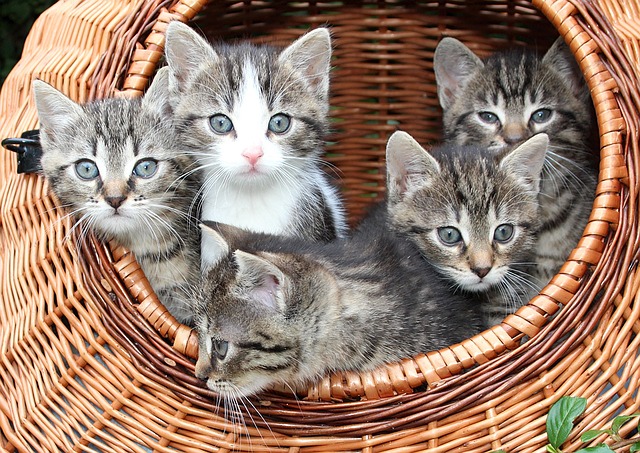
Some writers think that if one person says, “meow, meow, this is wrong, fix it” then they should fix it. Oh no, one kitten is complaining! Welp, guess I better fix the thing.
But the thing is, “get a second pair of eyes on it” comes in. If you’re feeling defensive, you can ease your stress knowing that only one kitten said so far that you are wrong. Just one.
I would suggest asking three kittens before you make any big changes. And it’ll be good if you can get some critique from more kittens critics.
2. Thank them right, and don’t get sarcastic.
If it’s really hard for you to not defend, here are some phrases to use every time you want to say or write something to the person who critiqued you:
- “Thank you for your critique”
- “Thank you for catching that”
- “I’ll think about that, thank you”
- “I appreciate your critiques”
- “Thanks for the feedback”
Modify these as you see fit, but don’t add anything after them. Keep it thankful and simple. I’ve had writers tell me, “I disagree with you but thanks anyway”. Makes me feel like I wasted my time on them and never want to work with them again because obviously they only wanted me to praise them.
See? There. They’ve lost me. Bad relationships can be created quite easily. Be careful with your words. Thank the person who critiqued your writing and don’t be sarcastic about it.
3. Dissect the beast.
Now, you’ve done all the stuff to keep good relationships. You and Critic have parted ways. You’re on your own. Go ahead, punch some imaginary walls, yell at some imaginary enemy, wallow in misery and tell yourself “I’m the worst writer ever!” Go ahead, laugh about your victory, grin like a maniac about how you “out-smarted the critic”, and tell yourself “I’m a genius!” Express all the things you wanted to in the privacy of your home or in the privacy of your mind.
After you’ve “emotioned” yourself out and have become a ghost, it’s time to face the beast you received. Within a single critique you will likely find some of these:
- Generic grammar suggestions (example: suggestions to make subjects clearer)
- Generic sentence flow/structure suggestions (example: suggestions for shorter or longer sentences, suggestions on how to better execute that paragraph where a character explains how the magic works)
- Generic spelling mistakes pointed out
- Inconsistencies I never noticed before (example: Bill wears a blue hat, and then suddenly the hat turns red? Two characters are hugging and talking and then suddenly they’re on the phone and not in person?)
- Word variety issue. I use “this word” too many times in one paragraph or one chapter
- Parts of the story pointed out to be confusing. I may or may not agree they’re confusing
- Things related to character or plot that need changing to something completely different, but changing it means big construction on the whole story which I don’t want to do. (example: instead of the characters going back to school, how about they go back to the library instead, and that’s where they discover the mysterious book?)
- Big sections suggested to be moved to other places (example: move the middle part of the book to the beginning)
- Being told some themes or words are not dealt with correctly or in the most respectable way (example: anything to do with culture, race, sexuality, religion, etc.) and then given, or not, ways to fix it
- Being told to delete something that is “a problem” (example: using a word for a fantasy species not knowing it was an offensive term) and then given, or not, reasons why it’s a problem
- A critique with no reasons (example: This scene is confusing.)
- A command to stop doing something with no reasons (examples from critiques I’ve received: Don’t mention her period ever. Don’t use the word “discrimination”.)
I listed up as many as I could think of. There might be more. What you’ll need to do is look at the critique you’ve received and see exactly which ones you agree with. You don’t have to like them. Just agree that yeah, sure, they make sense. I can see why the critic said that.
Example of Dissecting 1: “Don’t mention her period ever.”
Example of dissecting “Don’t mention her period ever.” This is a real sentence that was in a critique I received from a female person.
First reaction: WELL WHY NOT???? So annoyed. What is your PROBLEM-AH!
Second reaction: Breathe. Sponge.
Third reaction: I respond to her critique with “Thank you for the critique!” and leave it at that.
Dissecting time in the privacy of my mind: So, why would she say that? Sure, periods can be touchy subjects in some cultures. But do I show the character going through a period in detail? No. The character mentions it twice in the entire book in her thoughts. No one else has ever taken issue with the period mention, so I won’t follow this critique. I’ll do what I believe is right. I’ll completely ignore it.
As you can read, I decided that for a very good reason on my part, I will not take her critique. I decided, based on the lack of responses about mentioning “period”, that she was being ridiculous.
Example of Dissecting 2: Stubborn about my unlikeable character
Another example of dissecting is something that happened many years ago. I was told over and over by many people how unlikeable my main character was. Well, that’s the way I wrote her! She wasn’t relatable or the least bit redeemable in the minds of many, and yet, for a long time I stubbornly defended her.
It took a whole lot of humble puppy and a great big sponge to even begin to dissect the critique I was receiving. Why does everyone hate her so much they don’t want to continue the story? Is she really that unlikeable? But isn’t that what unlikeable characters are supposed to be like? And yet, so many people… If I have to defend the character every time someone says something negative about her, then maybe I’m not writing her right. I don’t have to make her likeable. Maybe…maybe I just need to write a better unlikeable character?
In this example, I wasn’t being a very good sponge, was I? Despite all the kittens meowing at me, I stubbornly defended my main character. But after I finally realized the truth, I was able to create an unlikeable but tolerable and somewhat redeemable character.
Thank you, critics, for stubbornly critiquing my character.
In the end…
How should you receive critique?
You need to be a humble puppy, a sponge, and thank without sarcasm. You need to keep good relationships with your kittens. That being said, you’re allowed to feel defensive in the privacy of your mind. You’re allowed to be stubborn and not be a good sponge right away. We’re not perfect beings, but we can try our best to be our best, right?
In the end, receiving a critique might send you up and down the best and worst emotional rollercoaster of your life, but it’ll also, hopefully, help you grow as a writer and as a person.
Overall, it’s great to receive a critique.

 FOXWOOD FOREST
One thought on “Be A Sponge: How to receive critiques as a writer”