
Kattaluna (singular), Kattalunae (plural). While the Kattalunae are considered a race of Elgana today, they didn’t use to be a race. They used to be a sub-species of native Elganians. But over the course of history, they became the only bipedal creatures left, and so came to be considered a race rather than a sub-species. (Note: Native Elganians haven’t gone extinct. Ilvagis are the only other native Elganians left on Elgana, but they’re not considered as bipedal creatures. Read more: Ilvagi – a Wiki)
Birth of the Kattaluna Race
Kattaluna, a Sub-species
The Kattaluna was a species of bipedal creatures – humanoid animals that were native Elganians. The bipeds were the only creatures inhabiting the Elgana centuries ago.
The Kattaluna sub-species comprised of one ruling royal family, Cheripious, with four smaller clans made up of the four head families. There were other Kattalunae outside of the clans as well. These were considered nomads and some clans refused to give them housing. All Kattalunae could use magick and only the Cheripious family had full access to the magick of the moon, and could use lunar magick at its full potential meaning they could fight with it projecting from their paws or weapons.
Many biped sub-species lived near or around the Kattalunae, some even working as warriors or servants to the Cheripious family. There is not much else written about the relationships between the Kattalunae and the other bipeds. But there is evidence of records being wiped from history as if the Cheripious royal family didn’t want anyone to know what went on behind closed doors.
Humans’ Arrival, Kattaluna Betrays
When Humans came from Earth to colonize Elgana, Kattaluna, the only ones with the strongest magick, selfishly locked themselves inside the magick-rich Fourth Ring, betraying their allegiance with other bipeds. The other bipeds would suffer under Humans until they would finally be bred out as biped genes are weaker compared to Human genes. Soon, a new race of Hybrids are born and Kattaluna are dubbed a race.
Magick of the Kattaluna Race
Lunar magick or the magick of the moon is said to be a counterpart to Ilvagis’ shadow magick. It is the only magick of the Kattaluna race.
Defeat of the Royal Family
The Cheripious family’s greed would ultimately lead to the end of any Kattaluna’s freedom. A choice of the Queen of the Kattaluna at the time to kill the King of the Ilvagis would begin a massive war that would end with the loss of the Kattalunae. The Cheripious family would perish in the war, going completely extinct. The Ilvagis would then corral the remaining four clans into one location of torus planet 3 where they did have homes already, but were now forced into smaller territories.
– Kattaluna –
What are they?
They are an anthro-cat race which perform magic through potion-making using natural ingredients like herbs. They age the same way Humans do. So, a sixteen-year-old Kattaluna is sixteen. There is no such thing as “cat years”.
What do they look like?
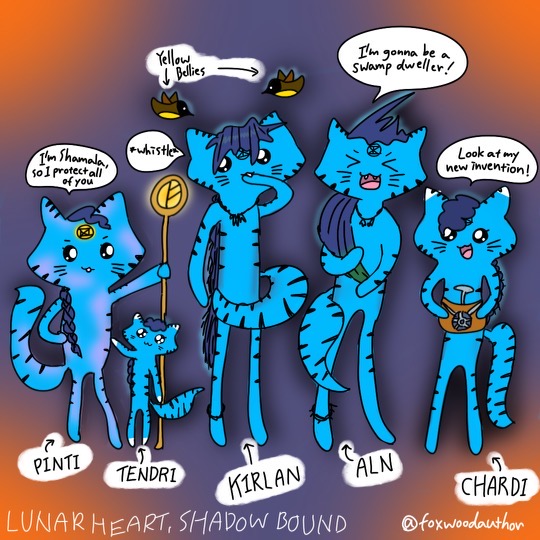
Kattaluna don’t have to wear clothes because their fur covers them up. Also, when they’re not wearing clothes, it doesn’t mean they are naked.
Kattaluna are different shades of blue depending on their clan. All Kattalunae have yellow eyes, typically, but your girl Pinti (MC of Lunar Heart, Shadow Bound) has blue-purple eyes that match her fur and she is the only one like this…
Where do they live?
Torus Planet 3 a.k.a Third Ring: The ring with the highest amount of vegetation. Swaths of forests and hills. Has one river and one desert area. Because of the year-round warm climate, they have a short autumn and warm winter. No snow. The Kattalunae have never seen snow, but they have seen frost and know about snow a little bit.
Language
Universal, ancient Kattalunan (mostly dead language that was oral and written) (Read more: A Language for Everyone – about Universal language, and Ancient Kattaluna Language)
Pinti and her friends have turned tail sign language into their secret language. Each Universal syllable or letter is a twist or flick of the tail. They cannot make long, grammatically correct sentences, but it’s enough to get their point across.
Gender
Male and female.
The Kattaluna race is the most primitive race in the Elgana who have stricter ideas when it comes to gender acceptance. Kattalunae believe there are only male and female for genders, and a male and female who become life partners and expected to try their hardest to have children. This is to ensure their dwindling species survival. So, in this race, there may be some Kattalunae with other orientations who feel uncomfortable conforming or being in a heterosexual relationship, and yet, they might feel the pressure to conform.
During puberty, males will typically become taller and have deeper voices. Males will also shed a lot of their fluffier baby fur and have coarser fur compared to females. Females will typically be shorter than males and have higher voices. Females will also retain a lot of fluffier, finer fur because they are the ones that carry the babies. Softer fur is thought of to be a natural comfort to babies and helps them suckle. Natures way of ensuring that mothers can properly care for their children.
Of course, there can be shorter males or males with higher voices, taller females or females with lower voices, but this is unusual.
Names
Often names have some meaning in relation to their ancestry or habitat, the weather of the day they were born, or the nature of their birth (for example, a miracle baby might get a special name to reflect that). Female naming conventions and male naming convention differ depending on the clan. For example, in Makiista Clan, a female name typically ends with “~i” and a male name typically ends with “~n”, so above you’ll see Pinti of Makiista Clan with her sister Tendri, and friend Chardi, also her male friends Kirlan and Aln. But in their neighboring Prendai Clan, female names typically end with “~s” such as the leader, Kalis, and male names end with “~r” such as her nephew, Vaiter.
Clans
Each clan lives in a certain part of the Third Ring (which is mostly covered in forest). There are four clans; Makiista, Prendai, Jurana, and Yajis. All clans are corralled by the Bloodstone Wall which was created by the Ilvagis when the Kattaluna race lost in the war. Usually referred to as “Bloodstone”, it resembles a bloodstone which is black and has red markings. Bloodstone is poisonous to the touch and a Kattaluna who touches it will die in less than five minutes. Only an Ilvagi or someone with extremely powerful lunar magick can destroy the wall.
Magick
Only clan leaders and their successors can use a good chunk of lunar magic and their potions are more effective than average because more magical properties of the potion can be activated. However, even they show signs of dwindling magick as magick is like a muscle that would slowly slip away if not used. Ilvagis purposefully forced the Kattalunae into only using lunar magick for healing potions so that the magick would wane and fade. Today, only few Kattalunae have active lunar magick.
Territories / Identifications
Makiista: Occupy the forest area. Sky-blue coat with dark blue stripes along the arms, thighs, the sides of the face, and sides of the ears. The only clan with many stripes. Said to help them blend in with the grasses in the forest. Although predominately short-hair, some may have ruffles of long hair on the sides of their faces and have bushy tails.
Prendai: Occupy the marshes and the river. Pale-blue almost white coat with light blue stripes. Some Prendai have such light-colored stripes, it looks like they don’t have stripes. Prendai also tend to have oilier skin making it easier to swim. The oil is natural and also from eating so much fish.
Jurana: Occupy the rocky, mountainous area. Indigo-blue coat with dark blue almost black stripes only on their arms and sometimes on their legs. Bushy tails are particular to the Jurana clan, helping them climb very steep mountains.
Yajis: Occupy the vast area of desert. The only nomad clan, moving from oasis to oasis. Yajis survive on very little and remain thin yet they are muscular. Sky-blue coat with a gradient of dark blue around the paws and feet. Very thin dark blue stripes only on the tail. They also have thicker padding on their paws and feet compared to other clans. This helps them walk long distances on the hot sand without getting burned.
Clan-Specific Diets
All Kattaluna are omnivores (like bears who have varied diets. Wiki: Bear.)
Makiista: Small animals like squirrels or rabbits. Small birds. Berries. Herbs. Anything else edible found in the forest. Wheat is made into a kind of flat bread. They also own goats for goat milk.
Prendai: Fish. Small birds. And water chestnut. Fish oil gives their fur a sleek look, almost shiny. Prendai also create pockets filled of river water to farm their own fish. They might dry the fish in the sun and eat that during times of dryer or colder seasons when fish are hard to come by.
Jurana: Birds of prey. Jurana use small birds as bait to get the bigger birds. They also make soup out of surrounding vegetation and herbs. The only bird they don’t eat is the eagle which they consider as the king of the skies, therefore, too precious to eat.
Yajis: Small animals and scorpions. They also herd sand sheep which are beige-colored sheep, a little leaner than the normal white sheep that Humans often own. Sand sheep are used for making cloth to wrap babies in or to make cotton balls to treat wounds. They are also used for their milk and if times are rough, they will be a source of food as well.

 FOXWOOD FOREST