
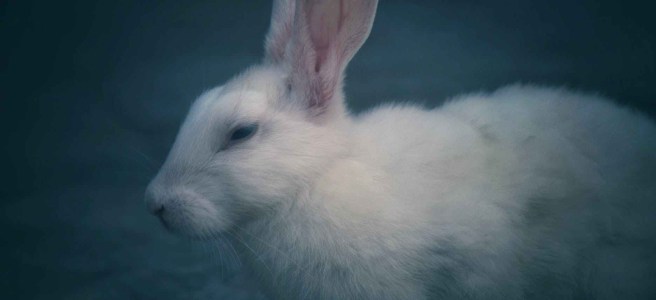
If you saw a white rabbit in a waistcoat, would you have followed it?
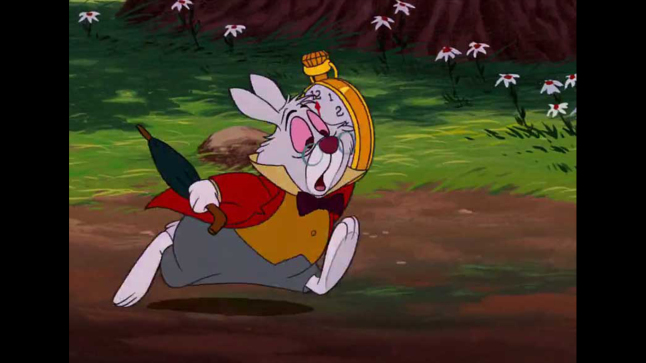
The famous White Rabbit in Lewis Carroll’s “Alice’s Adventures in Wonderland” is the driver of the entire story. Without him, Alice would have never gone on such an adventure (whether she actually went to Wonderland is another topic).
But why a white rabbit? There are many other kinds of rabbits. Some have black fur, brown fur, spots, gray fur…I know, because I used to take care of the bunnies at my elementary school.
(There are 305 domesticated breeds of rabbits including one called Dalmatian for its spots, and if you have never seen an Angora rabbit you need to look it up.)
Back to the White Rabbit.
Here are my theories on why a rabbit, a white rabbit.
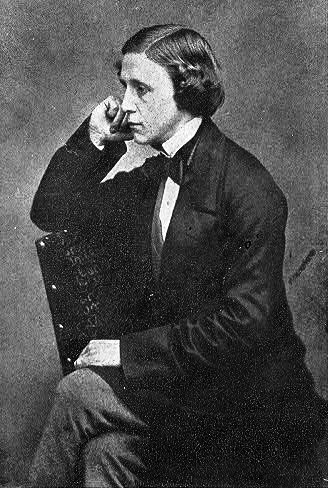
Theory 1: No Reason. Why not?
Why not a white rabbit? What’s wrong with a white rabbit? It just happened to be a white rabbit and no other reason.
I bet Lewis Carroll would say,
“I just decided to make it a white rabbit. Stop reading so much into it! Good grief!”
In fact, Lewis Carroll himself does say something about the white rabbit. I’ll get into that later.
Theory 2: White means purity or innocence.
White is often a symbol of purity, innocence, or cleanliness. Politicians, royalty, or butlers wear white gloves to show cleanliness. Apparently, if you wear white gloves, you aren’t suspicious either.
Alice is a little girl. She is still innocent and pure. So, a white rabbit is what she will go after because she is attracted to other things also seemingly innocent and pure. In the Disney movie, I don’t know if it was intentional, but before she meets the white rabbit, she is lying in a bed of white daisies.
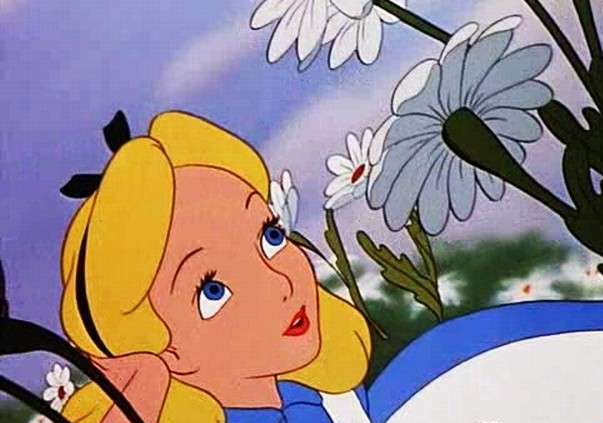
Hmm…suspicious, or should I say, purespicious because the daisy, in some cultures, represents purity and innocence, or simple happiness (according to this website).
Theory 3: Easy to spot.
A white rabbit is easy to spot.
Even if the rabbit is moving quickly, Alice can find him in a crowd. In the Disney film, the majority o the time, he’s the only white creature. He stands out. In the dark, the color white can look like it’s glowing. Have you noticed that?
Although on that note, it could’ve been a white anything really. A white sock puppet even. Imagine…Alice and the White Sock Puppet…
Theory 4: Common creature that burrows.
Wonderland is supposedly underground. Alice had to go underground somehow.
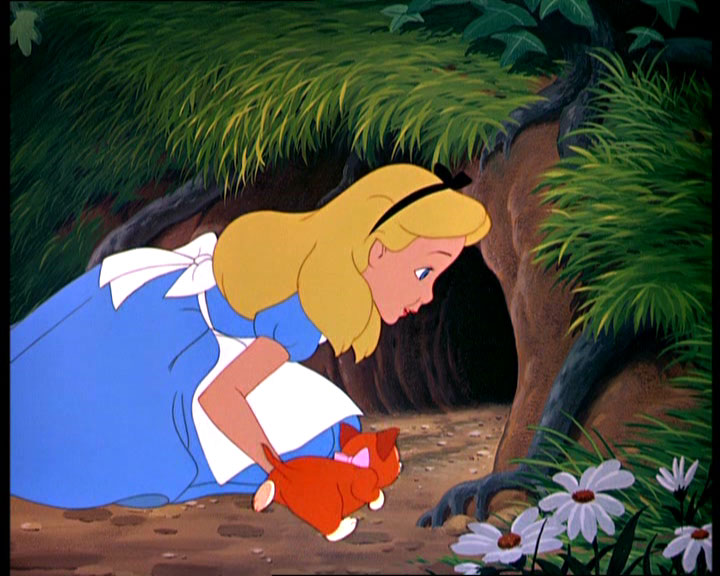
So, perhaps, a rabbit, who makes a burrow, gives her a reason to go underground. Alice chases the rabbit, the rabbit goes underground, and then she follows him down. The chapter in the book is even called, “Down the Rabbit-Hole”. So it IS the White Rabbit’s burrow, or at least a hole that the White Rabbit made.
Since he’s easy to spot, Alice can’t miss him going down the dark burrow.
But then, I go against myself. Rabbits aren’t the only animals that burrow. What about naked mole rats? What about meerkats? What about gophers or chipmunks?
Perhaps those are too absurd or too small? Chipmunks are teeny tiny. It had to be something more common and big enough to spot easily as well.
Theory 5: Rabbits move fast.
Rabbits are fast moving, jittery creatures. Not as fast as a cheetah, but they can hop-run pretty quickly. Alice had to hurry up and get to the Red Queen in time for her to come out and inspect the painted roses in the film. In the book, she had to be in time for the trial. Who ate the tarts? So, it had to be a fast moving creature for her to run after.
Theory 6: Timid old rabbit vs. brave little girl.
The White Rabbit wears a waistcoat, holds a pocket watch, and has on spectacles at the end of his little nose. He may be fast, but he’s also old. He’s a timid, nervous sort. He’s like a stereotype rabbit who’s nose twitches with nerves and who is fearful of any predators lurking in the bushes.
He represents a contrast to Alice’s youthfulness and bravery.
This comes from Lewis Carroll’s own words. It’s from a commentary he gives on “Alice on the Stage” which was a play based on his book. You can read the full article here.
Of the White Rabbit, it says,
And the White Rabbit, what of him? Was he framed on the `Alice’ lines, or meant as a contrast? As a contrast, distinctly. For her `youth’, `audacity’, `vigour’, and `swift directness of purpose’, read `elderly’, `timid’, `feeble’, and `nervously shilly-shallying’, and you will get something of what I meant him to be. I think the White Rabbit should wear spectacles. I am sure his voice should quaver, and his knees quiver, and his whole air suggest a total inability to say `Bo’ to a goose!
Alice and the White Rabbit are opposites. She’s young, swift, and I interpret, knows what she wants, and she’s brave, too. She can stand up for herself. The White Rabbit, however, is old, nervous, and doesn’t know what he wants. He’s a follower. He serves the Red Queen but it might only be out of fear that he does. He’s timid.
Conclusion
So, I gave 6 theories as to why it could be a white rabbit. Although Lewis Carroll did say himself that the White Rabbit contrasts Alice, that doesn’t mean that’s the only reason for making him a white rabbit. It could have well been a timid brown rabbit. Perhaps many of these theories apply.
I’m leaning toward the purity and innocence theory as well as the “common creature” theory and the “easy to spot” theory which is almost all the theories.
What do you think is the reason?

 FOXWOOD FOREST